Define

Define what gets built
before AI builds it.

In Define, your team agrees what a feature should do, what conditions it must meet, and a person approves it before any agent starts. Caliber keeps every version, points out gaps and gives each agent the approved spec to build against.

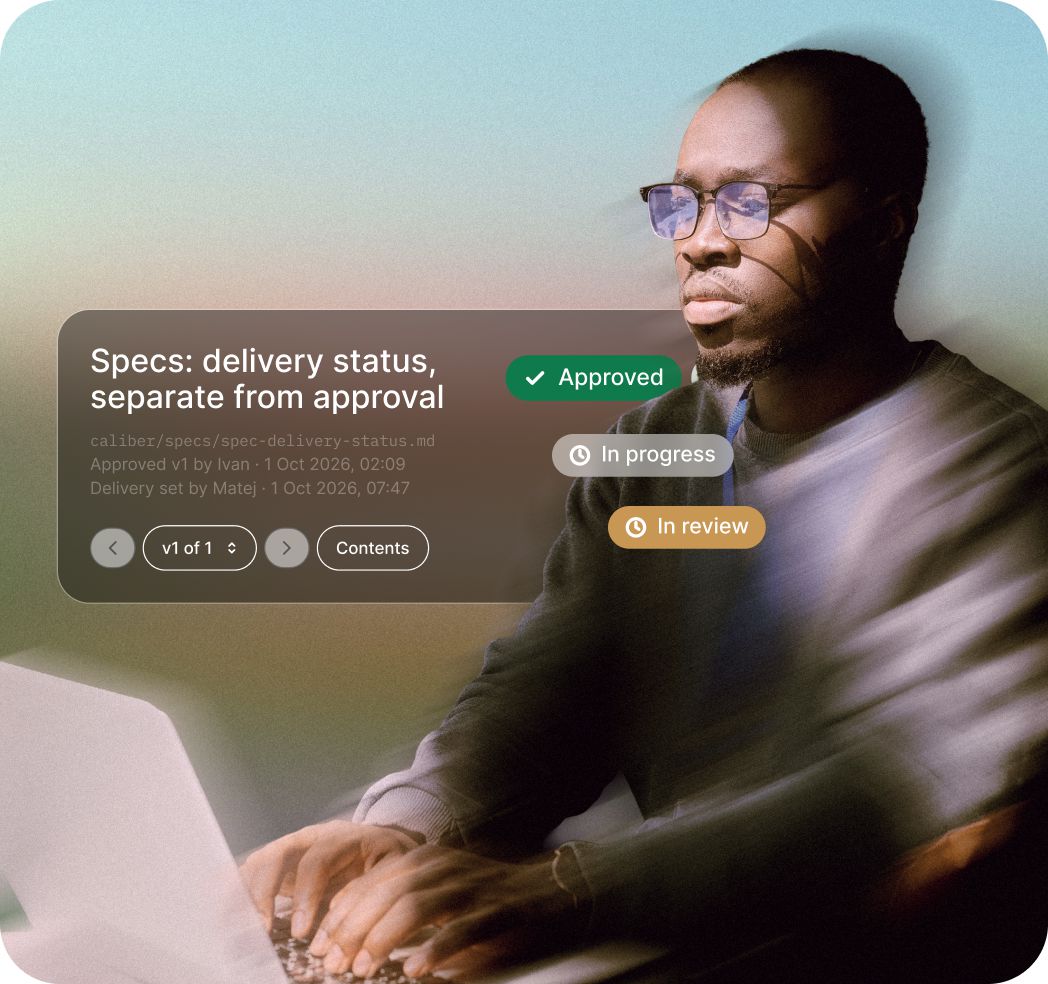
The Specs view in Caliber, with each spec's approval and delivery status

AI writes plausible code.
Define makes sure it’s what you agreed on.

Agents can produce working code from almost any prompt. But when each engineer prompts in their own way, product decisions get lost. An approved spec gives engineers and agents the same up-to-date brief, so features follow what the team decided.

Code generation without Caliber

  • No

    Each engineer briefs their agent in their own way.

  • No

    When a prompt leaves a gap, the agent fills it with an assumption no one approved.

  • No

    Decisions made while prompting stay in one engineer’s chat history.

  • No

    Without a complete spec, reviewers check the code against their own understanding of the task.

Spec-driven development with Caliber

  • Yes

    Every spec in Caliber follows the same structure.

  • Yes

    A person approves the spec before any agent starts, so the team decides what the agent would otherwise guess.

  • Yes

    The agent reads the approved spec through Caliber’s MCP connection and builds from it.

  • Yes

    Caliber checks every change against each criterion defined in the approved spec.

An engineer at a laptop, with a spec approved and its delivery status in progress

Versioned specifications

Approved by a person,
before an agent writes a line.

Specs live in the Caliber database and in the project repository at the same time. Each is draft, in review or approved, and every version keeps who changed what. Keeping what a feature should do separate from how it is built stops the design from slowly going off course as agents add features.

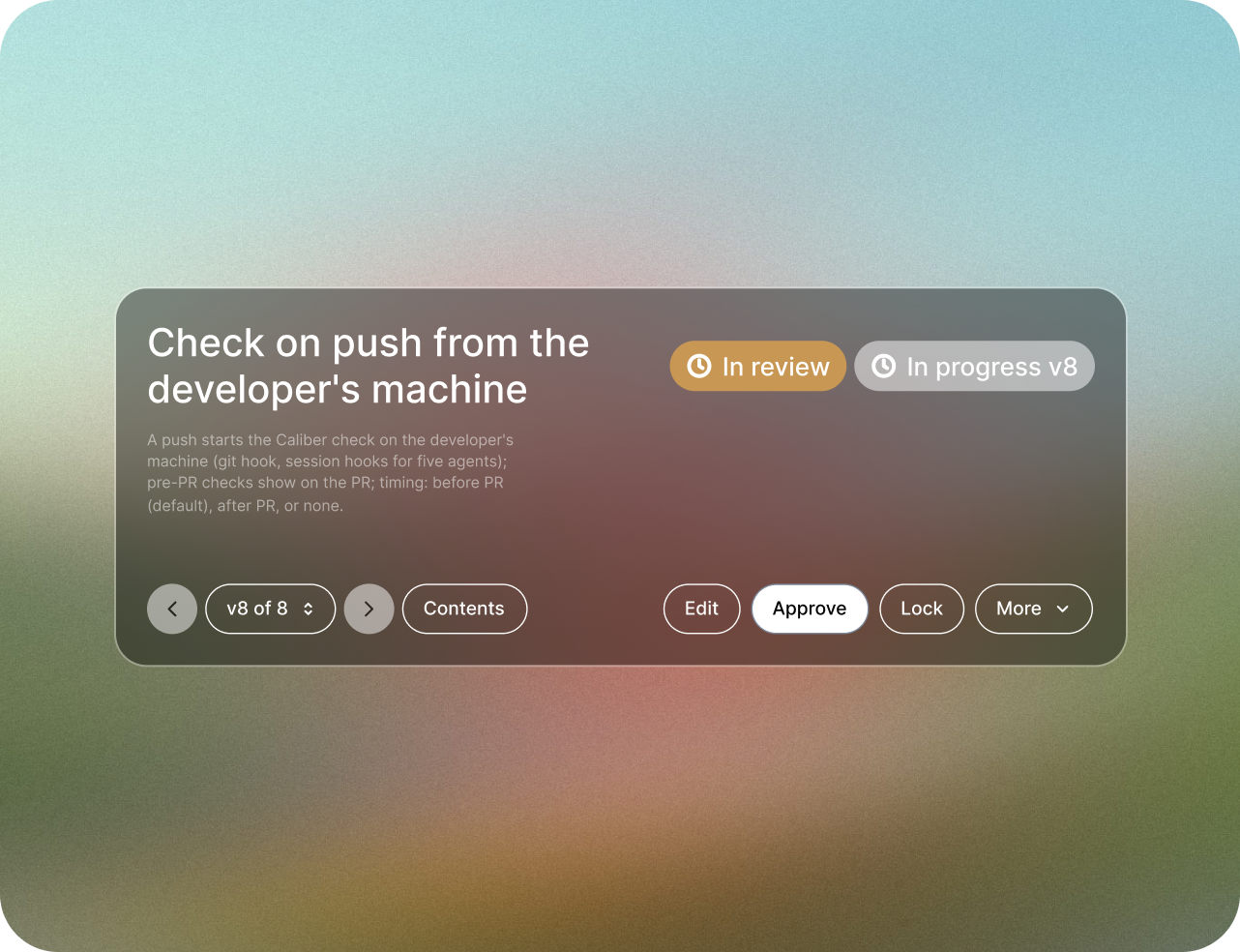
A spec moving from version 1 to version 2 after a person approves the change

Changing requirements

Plans change.
The approved spec changes with them.

No team can define everything before work starts, and Caliber does not expect it. When the team learns something new, they update the spec and a person approves the new version. From then on, every change is checked against the new version, and the history shows what changed and who approved it.

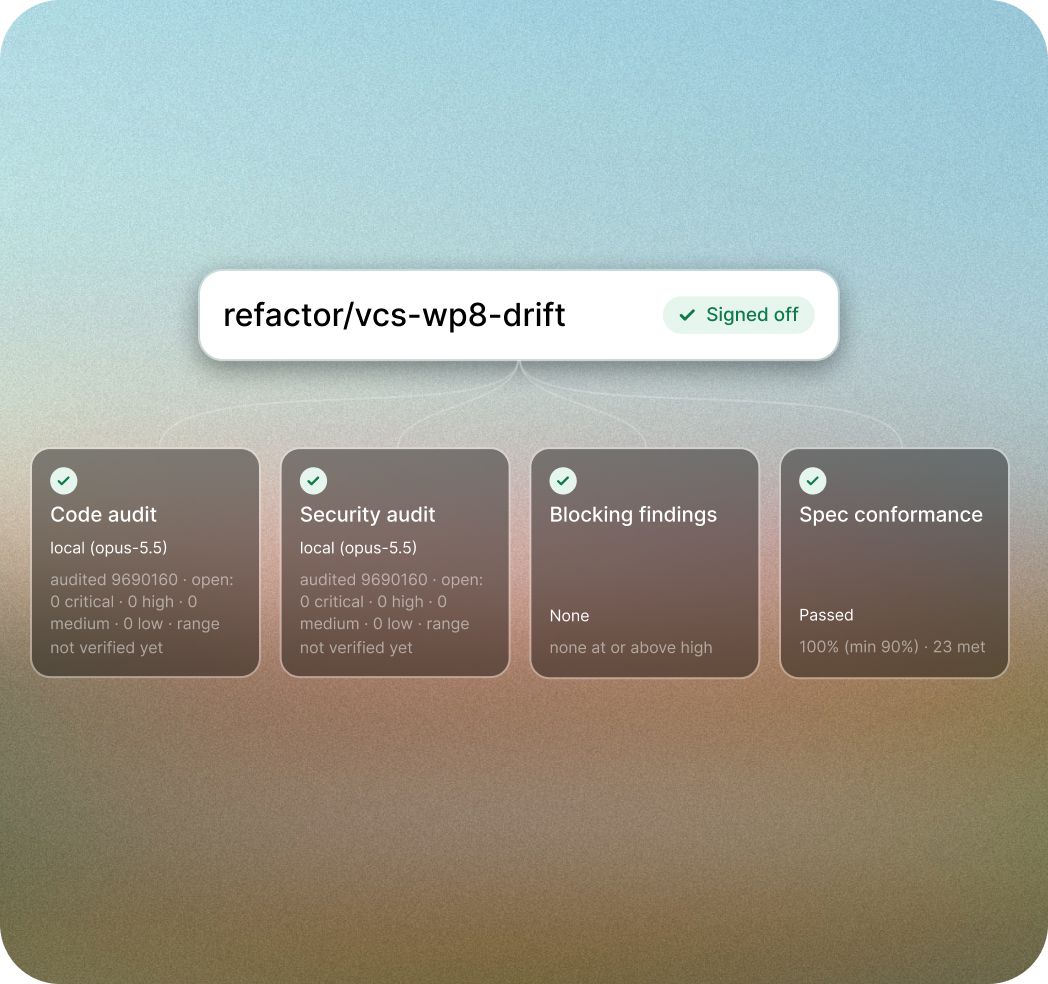
Caliber checking an implementation against each criterion in the approved spec

Automated alignment checks

The spec is reviewed.
Then the code is checked against it.

A model reviews each proposed spec for logical gaps and missing constraints. After the agent builds, it cross-references its implementation against the approved version, criterion by criterion. The finished code reflects what your team approved, with no guesswork from a loose prompt.

Stand behind what you ship with AI.

Request early access